

An offer can look convincing while leaving the central question unanswered: what exactly will you receive after paying? For the 2026–2027 season, treat the purchase as a sequence of checks. Before committing, collect enough information to recognize a suitable offer and understand what to do if it does not work in your home. A large advertised catalogue is only the beginning of that decision.
1. Quick answer
Pay only once you have identified the seller, confirmed your essential viewing on your device and understood both the initial charge and renewal. A verbal promise or a successful trial cannot replace all three checks.
Five key points
- Write down your requirements before reading the promotion.
- Verify the seller through an independent route.
- Use your actual living-room device for any available trial.
- Separate the initial payment, renewal and refund terms.
- Keep the terms you accepted and the order confirmation.
- 1Define the need
- 2Verify the seller
- 3Test and read
- 4Pay and retain records
2. Create a five-line buying brief
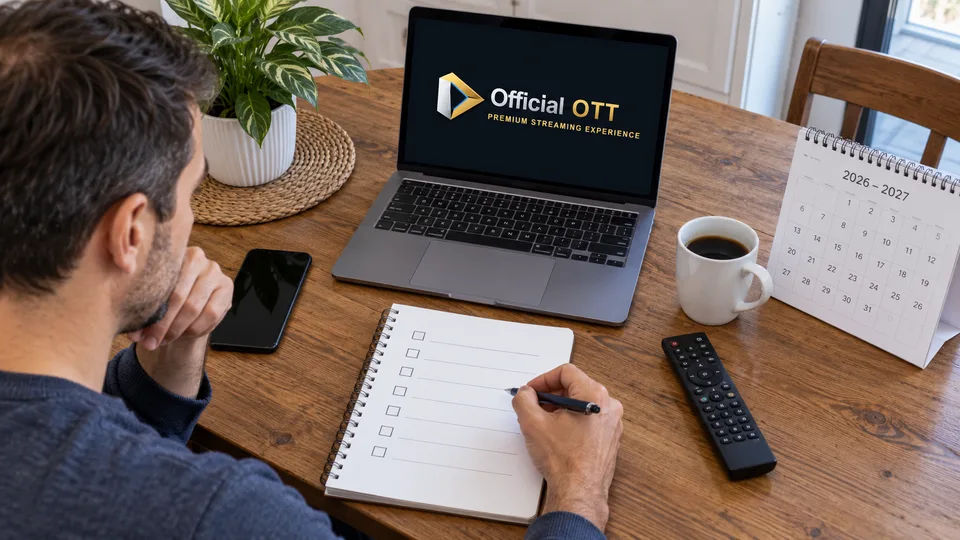
Record your essential programme or channel, its language, your viewing location, your device model and the number of people watching simultaneously. This brief prevents a long channel list from replacing your actual need. If your priority is a regional game with French commentary, the presence of a general sports category does not answer your question.
Add a spending limit and the period during which you expect to use the service. Someone following one competition faces a different decision from a household keeping television throughout the year. Keep these requirements visible when reviewing an offer. Each answer should resolve one specific line, including any geographical or device restriction that affects it.
3. Establish who will receive your payment
Navigate to the service website yourself and look for its business identity, contact information and terms. Compare these details with the checkout page. A difference may have an explanation, such as a separate billing provider, but it should be clear before you enter your information. A familiar logo copied into an advertisement is not enough.
The Canadian Anti-Fraud Centre describes fake advertisements and imitation shopping websites. It advises checking web addresses and never sharing authentication codes. Those precautions also matter when buying television equipment.
For programming, look for a verifiable connection to the broadcaster or distributor being advertised. An identifiable business is useful, but its identity alone does not establish rights to every programme in a catalogue.
Documentation: Canadian Anti-Fraud Centre — online merchandise fraud

4. Make an available trial answer real questions
If a trial is offered, use your normal device and viewing hours. Start your priority programme, change channels, check any required subtitles and try a second session only if the plan permits it. Record what actually worked. A screenshot supplied by a seller does not test your connection or the controls on your remote.
Record limitations too: an event unavailable during the trial, unconfirmed picture quality or an untested second screen. These remain open questions. A functioning menu does not turn them into successful checks. If there is no trial, examine the published policy and decide whether the uncertainty left over is acceptable for your intended purchase.

5. Find the point at which an offer becomes a charge
Identify the amount due today, its currency, the taxes shown, the period covered and the next payment. Then find the cancellation method and the exact scope of any refund policy. Stopping renewal, receiving a refund and closing an account are different operations. Completing one does not automatically establish the other two.
The Canadian Anti-Fraud Centre warns about trial or gift offers that lead to recurring charges the buyer did not understand. The word free therefore deserves the same careful reading as a subscription price.
Request a written answer before paying if an important condition remains unclear. Do not assume that one universal cooling-off period or trial requirement applies to every service in every province. Evaluate the actual terms presented for your transaction.
Documentation: Canadian Anti-Fraud Centre — subscription traps
6. Keep a useful record after ordering
Save the confirmation, the accepted version of the terms and the plan name. Protect this record because it may contain personal information. Store credentials in a password manager rather than screenshots you intend to send to support. Set a reminder ahead of renewal if you want to reassess whether the service still fits your viewing.
Once access is activated, return to the five-line brief. If promised programming is missing, describe the discrepancy to the seller with the date, device and plan name. Keep the response. For an unexpected payment, contact the merchant and your payment provider promptly to learn the applicable process without assuming a particular outcome.
7. Frequently asked questions
Should I immediately buy an annual plan?
A longer term commits more money. First verify the content and terms, then compare the total charge with your expected usage period. An advertised discount does not resolve either question.
Does an accepted payment prove the service is authorized?
No. A working checkout does not establish broadcasting rights or future programme availability. These require separate checks against relevant information.
What if the checkout differs from the advertisement?
Read the offer actually presented before confirming. If content, amount or duration differs, resolve the discrepancy and keep the information that informed your decision.
8. Conclusion and limitations
This is a purchasing workflow, not certification of a seller or legal advice about an individual transaction. Recheck the applicable terms when subscribing.
9. Method and sources
Documentary research conducted on October 13 and 14, 2026 using the references below. Procedures and examples form an original editorial synthesis. Illustrated scenes and interfaces are fictional: they do not represent an OfficialOTT catalogue or establish broadcasting rights. No purchase, service trial, private-account inspection or performance measurement was conducted for this article.
- Canadian Anti-Fraud Centre — online merchandise fraud
- Canadian Anti-Fraud Centre — subscription traps
Editorial update and further reading: