
1. Start with a neighbourhood question
The 2021 Census metropolitan area of Barrie comprises Barrie, Innisfil and Springwater. This boundary locates our guide; heritage resources about the city of Barrie do not necessarily describe the whole region. A street, neighbourhood or activity makes a more useful starting point than an overly broad search.
Frame a simple question: what did this street look like, how was the station used, or which events brought residents together? Choose one subject at first. You can then compare an image, an item record and a short clip without collecting dozens of tabs that are difficult to find again.
Online television can suit shared viewing, while a computer or tablet makes item descriptions easier to read. Keep the record link beside the player link. Enlarging a video should not mean losing its title, period or the organization presenting it.
IPTV and streaming are used here as ways to search for and watch content through the Internet. They do not guarantee a historical catalogue, local channel or redistribution rights. OfficialOTT provides a discovery route; the documents and access remain with their respective organizations.
2. Choose your own library access
Barrie Public Library lets Barrie and Oro-Medonte residents apply online for a card to use digital resources. Its page also describes other eligibility situations, including working or studying in Barrie. Read the conditions for your situation before completing a form; living in the CMA does not identify the right access by itself.
Innisfil ideaLAB & Library lists Kanopy for online films. Springwater Public Library has its own Watch Online page, with Kanopy and access using a library card and PIN. Start through your network instead of using a login link saved for a different library.
Inside your account, examine the conditions shown for the title: availability, access period and any borrowing or ticket allowance. We did not open accounts or borrow anything. Public pages cannot certify an individual member’s balance or access.
If you hold several valid cards, keep their starting points separate. A short bookmark label, such as “films — my library,” helps retain the correct route. When access fails, check the selected network and card validity before changing television settings.
3. Read an archive record before interpreting it
Barrie Historical Archive brings together photographs, video, audio and documents, with neighbourhood browsing. This organization lets you follow a place instead of a sequence of unrelated videos. It also helps you return to an item record when you want to understand a clip’s context.
We opened the record Parades, fires and train scenes. It identifies the period as 1942–1943, the neighbourhood as Downtown and the collection as Val Brucker, with the tag Silent Film. This check covers the record information; playback of that particular archive item was not validated.
Record the document’s period separately from the date you consult the website. Write “the record identifies” when repeating an attribution you have not independently confirmed. An image can suggest a hypothesis, but a building resembling another one does not establish its address or history.
The Silent Film tag offers a useful clue when sound may not be expected. Read the description before raising the volume sharply or replacing a cable. To share a discovery, keep the record link and your own observations; the archive identifies reproduction conditions to consult before reusing its material.
4. Use the heritage guide as a starting point
The Historic Neighbourhood Guide entry on Doors Open Ontario links to a municipal PDF and a video. It states that the site participated previously and is outside the current season. Use it as a discovery resource, then consult current programming if you plan an outing.
Its player link leads to Barrie Historical Archive Promo — Dunlop Street Happy Morning. We started this 54-second video and paused it at 14 seconds. The subtitle control reported captions unavailable during our check; no French version was confirmed.
For a family discovery session, start with this brief clip, then return to a specific question instead of letting automatic recommendations choose what comes next. Ask what each person noticed, what remains uncertain and which record might help verify the observation.
To continue on a larger screen, check the capabilities of your device and its app. Our check covered browser playback. It certifies neither casting to a television, nor a universal app, nor identical controls across all devices.
5. Move from an archive to a documentary
Barrie Public Library’s digital list presents Curio for CBC and Radio-Canada video and audio. It states that its subscription excludes classroom screening. Access for learning at home should therefore not be presented as permission to show a video to a school group.
The same list links to historical Barrie newspapers from 1847 onward, while noting gaps in digitization. They may offer another route into your question. The absence of an online result does not, by itself, demonstrate that an event never happened.
Distinguish what you seek from each format. An archive presents a document to examine; a documentary offers a constructed narrative; a newspaper contains material published at a particular time. Note who speaks, when the content was produced and what supports its explanation, without expecting all sources to answer in the same way.
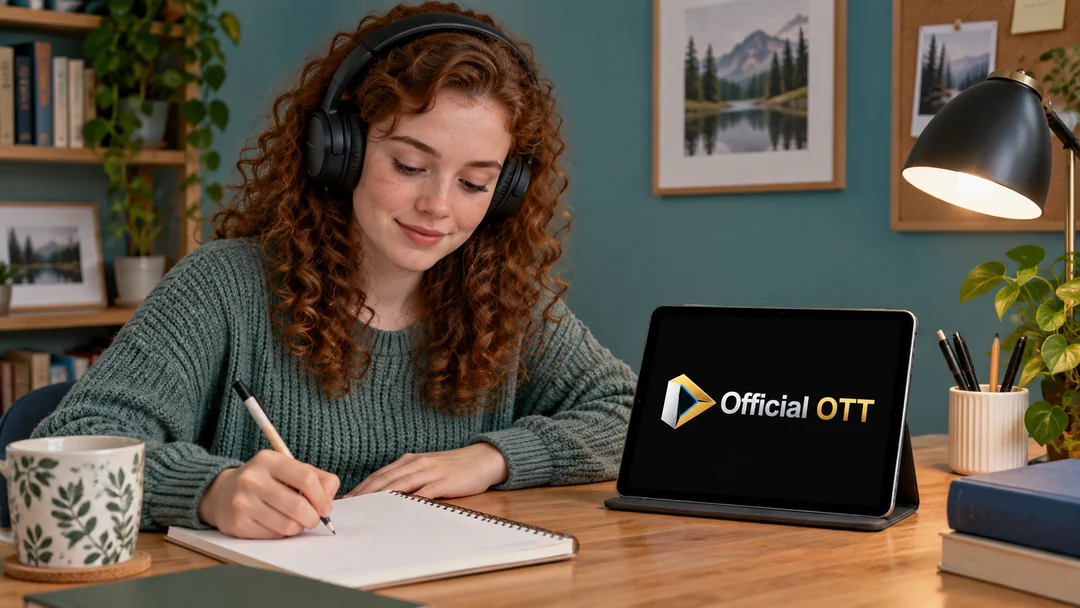
Choose a length that fits your evening and keep a notebook nearby. A short session that resolves one question may be more useful than a long list to finish. If a service needs a login, card or condition you cannot meet, save the title for later and return to a public resource.
6. Keep a small discovery file
For each useful item, keep five details: its title, record link, stated period, source or collection, and your question. Add an observation in your own words. This file remains understandable even when you return to the research weeks later.
Separate recorded facts from memories or assumptions. A relative may recognize a place and offer a valuable lead; label it as a lead until another source confirms it. Discussion becomes more interesting when everyone can distinguish what is established from what remains to explore.
Keep personal access details out of shared notes. For a digital loan, add only the useful expiry and network name, without a card number or PIN. For a public resource, prefer a record link that preserves context over an isolated copy of the media.
Finish with a concrete next question: find the same place in another period, compare a photograph with a description or seek another account. Your streaming setup becomes a tool for local discovery, with a chosen direction and sources you can find again.

Practical case: one street, two kinds of sources
A fictional Springwater resident becomes interested in Dunlop Street. They start with the short public clip, then open a Barrie Historical Archive record. They note its stated period and collection, leaving aside identifications they cannot confirm.
To continue with a documentary, they return to their Springwater library portal and examine the title conditions. Their file retains public links and a research question, while login details remain private.
Where should your discovery begin?
| Your aim | Starting point | Useful check |
|---|---|---|
| Locate the area | Statistics Canada — 2021 CMA | Barrie, Innisfil and Springwater |
| Explore a neighbourhood | Barrie Historical Archive | Period, collection and context |
| Begin with a short clip | Dunlop Street Happy Morning | Player and captions |
| Continue with a film | Your library portal | Card, catalogue and access period |
| Prepare a school activity | Chosen service’s conditions | Do not infer screening rights |
Practical checklist
- Choose a specific local question.
- Identify the library network.
- Read the item record before watching.
- Separate document date from consultation date.
- Check the player and usage conditions.
- Keep links and your own observations.
Frequently asked questions
Does the Barrie CMA use a single library card?
No. A statistical boundary does not replace library rules. Identify your network and card conditions.
Why might an archive video have no sound?
Some items are identified as silent films. Consult the record before deciding that your setup has failed.
Does the Doors Open entry announce a visit this year?
The entry consulted describes past participation and exclusion from the current season. Check current events when planning an outing.
Were French captions verified for the video?
No. The short clip’s player reported subtitles unavailable during the check.
Does OfficialOTT supply the archives or library access?
No. Documents, accounts and access conditions remain with their respective organizations.
Conclusion
In Barrie and its region, a screen can connect a neighbourhood question to an archive and then a documentary. Keep the record with the video, choose the right library network and distinguish what you observe from what the source confirms.
Scope and limits of this guide
Official sources consulted October 7, 2026; 2021 Census geography. Resource and membership pages consulted; Parades, fires and train scenes record opened, without confirmed playback. Doors Open video link followed to YouTube; beginning played and paused at 14 of 54 seconds, captions unavailable. Linked PDF not inspected in detail. No account creation, borrowing, purchase or classroom screening tested. Advice and fictional case written by OfficialOTT. Six generated illustrations depict fictional people and homes; all prints, albums and wall pictures are invented and do not reproduce the cited archives.
Method and sources
- Statistique Canada — RMR de Barrie, 2021
- Barrie Public Library — Get a Card
- Barrie Public Library — Digital Library, All
- Innisfil ideaLAB & Library — Online Movies: Kanopy
- Springwater Public Library — Watch Online
- Barrie Historical Archive
- Barrie Historical Archive — Parades, fires and train scenes
- Ontario Heritage Trust — Historic Neighbourhood Guide
- Barrie Historical Archive — Dunlop Street Happy Morning
Images are AI-generated editorial illustrations of fictional situations. They do not document real installations or customer experiences.